
Clarifying the IRA’s “Foreign Entities of Concern” Limitations
Mining investment news, insights, and company profiles
Subscribe
About
121 Mining Investment
  • Home
  • News
    • All News
    • Gold
    • Silver
    • Copper
    • Nickel
    • Lithium
    • Precious Metals
    • Base Metals
    • Battery Metals
    • Exploration
    • Development
    • Production
  • Analysis
  • Explainers
  • Company Profiles
  • Assay TV
    • CEO Interviews
    • Mining Masters: Inside Investment Strategies
    • Investor Panels & Presentations
  • Magazine
  • Contribute
  • The Assay Podcast
  • Home
  • News
    • All News
    • Gold
    • Silver
    • Copper
    • Nickel
    • Lithium
    • Precious Metals
    • Base Metals
    • Battery Metals
    • Exploration
    • Development
    • Production
  • Analysis
  • Explainers
  • Company Profiles
  • Assay TV
    • CEO Interviews
    • Mining Masters: Inside Investment Strategies
    • Investor Panels & Presentations
  • Magazine
  • Contribute
  • The Assay Podcast
No Result
View All Result
Subscribe
The Assay - Mining investment news, insights and company profiles
No Result
View All Result
Home Articles Feature Story

Clarifying the IRA’s “Foreign Entities of Concern” Limitations

byThe Assay
2 years ago
Clarifying the IRA’s “Foreign Entities of Concern” Limitations

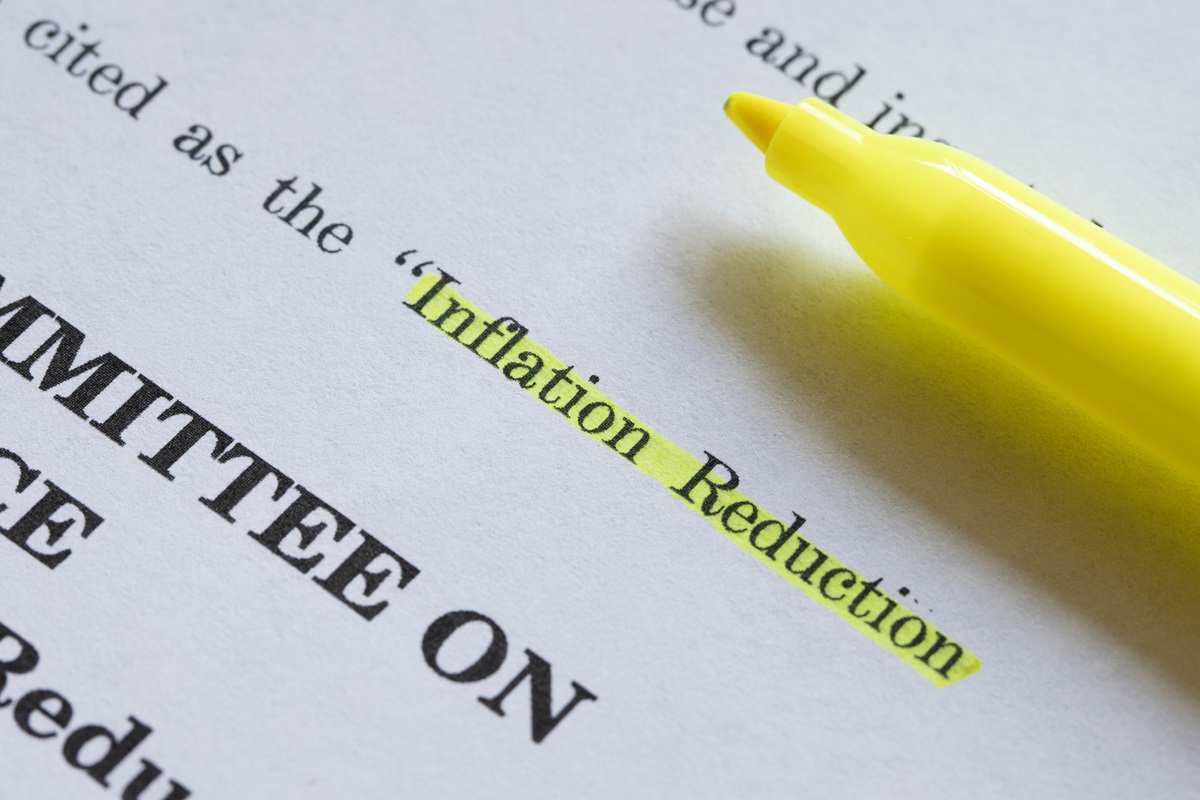
The US federal government has provided clarity on electric vehicle (EV) and battery material sourcing for its Inflation Reduction Act (IRA) tax credits regarding “foreign entities”. The latest guidance outlines direct and indirect control of a company as well as ownership thresholds to determine if that company is subject to foreign entity of concern (FEOC) limitations.

Both the Bipartisan Infrastructure Law, which allocated US$6B of credits for batteries and the critical minerals required to make them, and the IRA’s cap of US$7,500 per car will be blocked off if certain critical minerals or battery components are sourced from FEOCs.

The thresholds set a standard for tax credit implementation, like restrictions on the semiconductor industry by the US Chips and Science Act and defines FEOCs specifically as China, Russia, North Korea, and Iran, barring them from inclusion in the highly coveted credits. 

The rules incentivize the production of battery materials and components in the US and allied countries, and propose a criteria of a 25% ownership threshold for determining whether a company is controlled by a FEOC.

From 2024, no clean-energy vehicle can qualify for a subsidy if it contains any battery components that are manufactured or assembled by a FEOC. In 2025, the restrictions will widen to include any critical minerals in the battery that are extracted, processed, or recycled by a FEOC.

Companies are waiting to see how the rules will affect existing relationships and influence US trade agreements, such as the one being negotiated with Indonesia.

The impact is still unclear. The proposed rules could also boost metals producers in Canada and Latin America, along with companies advancing US projects, such as General Motors Co., which has a US$650M equity investment in Lithium Americas Corp. lithium project.

However, the new rules could also influence ongoing limited free trade agreement negotiations, particularly with rising nickel giant Indonesia, who the US has been attempting to work out a trade deal with despite its significant Chinese investment.

Some major miners of battery minerals, including those within countries that have free trade agreements with the US also have a degree of their shares or board positions held by entities in China. For example, SQM (Sociedad Química y Minera de Chile), the world’s second-largest lithium producer in 2022, has about 22% of its common shares held by China-based Tianqi Lithium Corp.

Chinese companies have also been deeply involved in Australia’s mining sector – as well as being major customers, refiners, and now show a growing interest in Australian local processing as well.

Additionally, it’s uncertain whether EV batteries like those produced at Ford and Chinese battery maker CATL’s (Contemporary Amperex Technology Co. Ltd.) Michigan plant would qualify for US tax credits under the latest guidance.

The latest guidance has also failed to define “non-traceable battery materials” that manufacturers will not be required to provide FEOC-compliant tracking information on. The US Treasury and Department of Energy (DoE), along with the IRS, are considering whether certain critical minerals contained in electrolyte salts, electrode binders, and electrolyte additives will qualify although they typically account for less than 2% of the value of critical minerals in a battery.

The DoE is accepting comments on the guidance until 3 January, while the Treasury Department and IRS guidance is open for public comment until 18 January.

Tags: Battery MaterialsEVs
TweetShareSend
Previous Post

Viridis Mining and Minerals Continues to Make Significant REE Discoveries

Next Post

Some Major Mergers and Acquisitions Hitting the Headlines this Year:

The Assay

The Assay

Related Posts

Establishing Responsible Minerals Supply Chains Across Africa
Investor Insight

Establishing Responsible Minerals Supply Chains Across Africa

byThe Assay
12 February, 2025
Strategic Investing in African Resources and Mining: How IDC is Focusing Investments in Zambia and Throughout the Continent
Investor Insight

Strategic Investing in African Resources and Mining: How IDC is Focusing Investments in Zambia and Throughout the Continent

byThe Assay
27 January, 2025
The Africa Mining Vision:Setting the Agenda for the Sustainable Development of Africa’s Minerals Sector
Analysis

The Africa Mining Vision: Setting the Agenda for the Sustainable Development of Africa’s Minerals Sector

byDr. Marit Kitaw, Interim Director, AU-African Minerals Development Center (AMDC)and1 others
20 January, 2025
Spotlight on Indonesian Nickel –What’s next for the market?
Analysis

Spotlight on Indonesian Nickel –What’s next for the market?

byThe Assay
17 January, 2025
Defense Metals: Securing a New Supply of Rare Earth Elements for North America
Analysis

Tracking Trends in Critical Minerals, EVs, and Emerging Technologies

byThe Assay
9 January, 2025
Trudeau Slaps Steep Tariffs on Chinese EVs
Feature Story

Trudeau Slaps Steep Tariffs on Chinese EVs

byThe Assay
27 August, 2024
Next Post
Some Major M&As Hitting the Headlines this Year:

Some Major Mergers and Acquisitions Hitting the Headlines this Year:

ADVERTISEMENT

Popular Articles

  • Argonaut Gold and Alio Gold Complete Merger

    Argonaut Gold and Alio Gold Complete Merger

    0 shares
    Share 0 Tweet 0
  • What is Strip Mining?

    0 shares
    Share 0 Tweet 0
  • The Assay Explains Surface Mining

    0 shares
    Share 0 Tweet 0
  • Adriatic Announces Key Management Changes

    0 shares
    Share 0 Tweet 0
  • The Assay Guide to Iron Ore

    0 shares
    Share 0 Tweet 0
  • Home
  • News
  • Analysis
  • Investor Discussions
  • CEO Interviews
  • Mining Masters: Inside Investment Strategies
  • Company Profiles
  • Newsletter
  • Magazine
  • #783 (no title)
  • Contact Us
Hyve logo

Please note: This Web site and The Assay magazine and the information and materials on this Web site and in The Assay magazine are not, and should not be construed as, an offer to buy or sell, or as a solicitation of an offer to buy or sell, any regulated products, securities or investments. This Web site and The Assay Magazine do not, and should not be construed as acting to, sponsor, advocate, endorse or promote any regulated products, securities or investments. This Web site and The Assay magazine and the information and materials on this Web site and in The Assay magazine do not, and shall not be construed as, making any recommendation or providing any investment or other advice with respect to the purchase, sale or other disposition of any regulated products, securities or investments, including, without limitation, any advice to the effect that any mining or metals related transaction is appropriate or suitable for any investment objective or financial situation of a prospective investor. A decision to invest in any regulated products, securities or investments should not be made in reliance on any of the information or materials on this Web site or in The Assay magazine. Before making any investment decision, prospective investors should seek advice from appropriately qualified and licensed financial, legal, tax and accounting advisers, take into account their individual financial needs and circumstances and carefully consider the risks associated with such investment decision.

Privacy Notice
Cookies
Hong Kong Residents Privacy Statement

© 2026 The Assay

No Result
View All Result
  • Home
  • News
    • All News
    • Gold
    • Silver
    • Copper
    • Nickel
    • Lithium
    • Precious Metals
    • Base Metals
    • Battery Metals
    • Exploration
    • Development
    • Production
  • Analysis
  • Explainers
  • Company Profiles
  • Assay TV
    • CEO Interviews
    • Mining Masters: Inside Investment Strategies
    • Investor Panels & Presentations
  • Magazine
  • Contribute
  • #82967 (no title)

Please note: This Web site and The Assay magazine and the information and materials on this Web site and in The Assay magazine are not, and should not be construed as, an offer to buy or sell, or as a solicitation of an offer to buy or sell, any regulated products, securities or investments. This Web site and The Assay Magazine do not, and should not be construed as acting to, sponsor, advocate, endorse or promote any regulated products, securities or investments. This Web site and The Assay magazine and the information and materials on this Web site and in The Assay magazine do not, and shall not be construed as, making any recommendation or providing any investment or other advice with respect to the purchase, sale or other disposition of any regulated products, securities or investments, including, without limitation, any advice to the effect that any mining or metals related transaction is appropriate or suitable for any investment objective or financial situation of a prospective investor. A decision to invest in any regulated products, securities or investments should not be made in reliance on any of the information or materials on this Web site or in The Assay magazine. Before making any investment decision, prospective investors should seek advice from appropriately qualified and licensed financial, legal, tax and accounting advisers, take into account their individual financial needs and circumstances and carefully consider the risks associated with such investment decision.

Privacy Notice
Cookies
Hong Kong Residents Privacy Statement

© 2026 The Assay