
Cobalt Shifts From Metal to Chemical Markets
Mining investment news, insights, and company profiles
Subscribe
About
121 Mining Investment
  • Home
  • News
    • All News
    • Gold
    • Silver
    • Copper
    • Nickel
    • Lithium
    • Precious Metals
    • Base Metals
    • Battery Metals
    • Exploration
    • Development
    • Production
  • Articles
  • Mining Explainers
  • Company Profiles
  • Assay TV
    • CEO Interviews
    • Mining Masters: Inside Investment Strategies
    • Investor Panels & Presentations
  • Magazine
  • Contribute
  • The Assay Podcast
  • Home
  • News
    • All News
    • Gold
    • Silver
    • Copper
    • Nickel
    • Lithium
    • Precious Metals
    • Base Metals
    • Battery Metals
    • Exploration
    • Development
    • Production
  • Articles
  • Mining Explainers
  • Company Profiles
  • Assay TV
    • CEO Interviews
    • Mining Masters: Inside Investment Strategies
    • Investor Panels & Presentations
  • Magazine
  • Contribute
  • The Assay Podcast
No Result
View All Result
Subscribe
The Assay - Mining investment news, insights and company profiles
No Result
View All Result
Home Articles Analysis

Cobalt Shifts From Metal to Chemical Markets

George Heppel, CRUbyGeorge Heppel, CRU
1 September, 2017
in Analysis
Reading Time: 4 mins read
Why battery miners are swarming Europe’s biggest rock collection

Cobalt demand is expected to exceed 100kt this year, and CRU forecasts total demand of cobalt materials to increase at a CAGR of 11.6% over the next ten years. Alongside this large increase in demand, CRU also expects changes to the way refined cobalt is traded and produced. This is primarily due to a shift in cobalt demand from metallic products to chemical products.

The Cobalt Market Has Two Main Categories
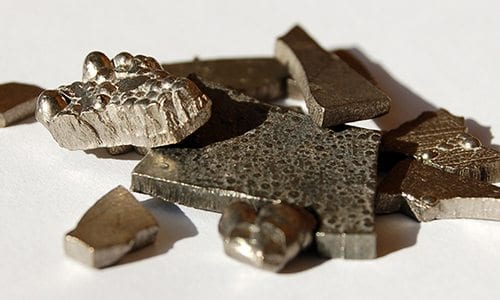
Metallic cobalt is used for the manufacture of high-temperature superalloys, stainless steels, medical prosthetics, hard-facing products and other niche applications. It is normally sold in the form of 99.8% and 99.3% purity cobalt ingot or cut cathode on the LME, or priced according to price discovery from a wide range of sources. Cobalt chemicals have many applications, but their most prominent use is in the manufacture of Li-ion batteries. Other key uses include the manufacture of catalysts, pigments, polymers and tyres. The most widely used cobalt chemicals are cobalt oxide, cobalt sulphate and cobalt acetate, as well as other more niche compounds for rarer applications.

How Is This Likely To Change In The Future?
Cobalt metal has historically been the largest traded segment of cobalt products due to its application in aerospace and performance steels. However, in the past ten years cobalt chemicals have eclipsed cobalt metal in terms of total demand, primarily due to the standardisation of Li-ion batteries across consumer electronics – most notably in the market for electric vehicles. In 2009, refined chemicals comprised 55% of total cobalt demand, with cobalt metal making up the rest. In 2017, CRU estimates that they will comprise 63% of the market, and this is expected to steadily increase to over two thirds of the market by 2026.

Due to this strong increase in cobalt demand for chemical applications, CRU estimates that in 2017 there will be a world deficit of 4,000 tonnes for refined cobalt chemicals and over 1,000 tonnes for cobalt metal. CRU expects that the cobalt metal deficit will narrow in the mid-term (2017-2021), while the refined cobalt chemical deficit will remain at high levels.

COBALT SHIFTS FROM METAL TO CHEMICAL MARKET

The relative availability of cobalt metal compared with cobalt chemicals over the next five years could result in a price arbitrage opening between the two products, as current acid dissolution capacity struggles to meet chemical demand.

How Will The Market Adjust To This Change?
Despite the increasing importance of chemicals in the cobalt market, there is currently no widely-accepted benchmark price for any refined cobalt chemical products. The majority of cobalt chemical manufacturing occurs in China, where concentrates are imported primarily from the DRC, processed into chemicals and intermediates and then sold on into various sectors.

COBALT SHIFTS FROM METAL TO CHEMICAL MARKET

Chemical manufacturers without the ability to process cobalt concentrates are forced to purchase 99.3% cobalt ingot or broken cathode and then use acid dissolution techniques to form cobalt intermediates.As battery chemistries become standardised across the EV market, we believe that cobalt chemicals will begin to become commoditised and more widely traded as opposed to cobalt in metal form. In addition to this, we believe that many integrated production projects will begin to shift from producing metallic cobalt to producing cobalt chemicals. Assuming that these producers can supply the chemicals to a standardised commodity grade which is accepted in the market (in the same way that 99.8% cobalt metal is widely accepted), this could effectively simplify the supply chain and allow producers to trade directly with end users in the battery and chemicals industry.

Which Cobalt Chemicals Are Best Suited For Commoditisation?
Most cobalt chemical demand in recent years has come from the handheld electronics industry for high-charge density applications such as mobile phones, tablets, laptops and other electronics. The industry standard battery chemistry for these applications is LCO (lithium cobalt oxide) which uses cobalt oxide as a raw material, and as a result cobalt oxide currently represents over half of all cobalt chemical demand.

However, the electric vehicle and energy storage system markets are expected to be the principle drivers of cobalt demand growth over the next ten years. These industries require much larger battery sizes and as a result, manufacturers are keen to limit cobalt dependency in order to reduce costs and limit the risk of running into issues acquiring raw materials.

COBALT SHIFTS FROM METAL TO CHEMICAL MARKET

Consequently, NCA (Nickel Cobalt Aluminium) is fast becoming the industry standard for EVs and ESS as opposed to LCO for conventional electronics. NCA chemistries typically have a far lower cobalt content by weight and require cobalt sulphate as a raw material – as opposed to cobalt oxide for LCO. As a result, CRU expects cobalt sulphate to be the most widely traded cobalt chemical in the long-term, with total demand reaching just under 60,000 tonnes by 2026.

Conclusion
The increasing importance of cobalt chemicals for the battery sector has led to a substantial market deficit in 2017, as well as strong price increases y/y. The current cobalt supply chain of producers selling broken cathode to third parties for dissolution is inefficient, and some producers may seek to produce refined cobalt chemicals in the mid- to long-term. This smoothing of the supply chain may lead to the commoditisation of several key cobalt chemicals, as chemical trading volumes begin to eclipse metal trading.CRU believes that cobalt sulphate is the most viable cobalt intermediate for commoditisation due to its importance in battery chemistries associated with EVs and ESS. CRU estimates that total cobalt sulphate demand will reach just under 60,000 tonnes in 2026.

TweetShareSend
Previous Post

Why the FED’S actions are bullish for commodity prices

Next Post

Gold will go to $2,000 plus on coming central bank failure

Related Posts

GoGold Resources Reports Solid Q2 Parral Production and Strong Cash Growth
Other

GoGold Resources Reports 21% Increase in Quarterly Production at Parral

byThe Assay
10 July, 2026
Critical Metals Latest News
Other

Critical Metals Reviews Strategic Options to Unlock Value from Non-Core Assets

byThe Assay
9 July, 2026
International Graphite
Articles

International Graphite’s Italian Processing Hub To Meet Europe’s Domestic Consumption

byThe Assay
6 July, 2026
Critical Metals Latest News
Other

Critical Metals Updates Timeline and Structure of European Lithium Acquisition

byThe Assay
6 July, 2026
Critical Metals Corp Appoints Rear Admiral Peter Stamatopoulos to Advisory Board, Bolstering Strategic Supply Chain and Defence Expertise
Development

Critical Metals Acquires Arctic Accommodation Vessel for Tanbreez Development

byThe Assay
2 July, 2026
GoGold Resources Reports Solid Q2 Parral Production and Strong Cash Growth
Other

GoGold Resources Releases Sustainability Report and Announces Board Change

byThe Assay
2 July, 2026
Next Post
Gold will go to $2,000 plus on coming central bank failure

Gold will go to $2,000 plus on coming central bank failure

ADVERTISEMENT

Popular Articles

  • Argonaut Gold and Alio Gold Complete Merger

    Argonaut Gold and Alio Gold Complete Merger

    0 shares
    Share 0 Tweet 0
  • Critical Metals Updates Timeline and Structure of European Lithium Acquisition

    0 shares
    Share 0 Tweet 0
  • Critical Metals Reviews Strategic Options to Unlock Value from Non-Core Assets

    0 shares
    Share 0 Tweet 0
  • Paving the Way for the Transition to Green Steel

    0 shares
    Share 0 Tweet 0
  • The Assay Guide to Iron Ore

    0 shares
    Share 0 Tweet 0
  • Home
  • News
  • Mining Articles
  • Investor Discussions
  • CEO Interviews
  • Mining Masters: Inside Investment Strategies
  • Company Profiles
  • Newsletter
  • Magazine
  • About Us
  • Contact Us
Hyve logo

Please note: This Web site and The Assay magazine and the information and materials on this Web site and in The Assay magazine are not, and should not be construed as, an offer to buy or sell, or as a solicitation of an offer to buy or sell, any regulated products, securities or investments. This Web site and The Assay Magazine do not, and should not be construed as acting to, sponsor, advocate, endorse or promote any regulated products, securities or investments. This Web site and The Assay magazine and the information and materials on this Web site and in The Assay magazine do not, and shall not be construed as, making any recommendation or providing any investment or other advice with respect to the purchase, sale or other disposition of any regulated products, securities or investments, including, without limitation, any advice to the effect that any mining or metals related transaction is appropriate or suitable for any investment objective or financial situation of a prospective investor. A decision to invest in any regulated products, securities or investments should not be made in reliance on any of the information or materials on this Web site or in The Assay magazine. Before making any investment decision, prospective investors should seek advice from appropriately qualified and licensed financial, legal, tax and accounting advisers, take into account their individual financial needs and circumstances and carefully consider the risks associated with such investment decision.

Privacy Notice
Cookies
Hong Kong Residents Privacy Statement

© 2026 The Assay

No Result
View All Result
  • Home
  • News
    • All News
    • Gold
    • Silver
    • Copper
    • Nickel
    • Lithium
    • Precious Metals
    • Base Metals
    • Battery Metals
    • Exploration
    • Development
    • Production
  • Articles
  • Mining Explainers
  • Company Profiles
  • Assay TV
    • CEO Interviews
    • Mining Masters: Inside Investment Strategies
    • Investor Panels & Presentations
  • Magazine
  • Contribute
  • The Assay Podcast

Please note: This Web site and The Assay magazine and the information and materials on this Web site and in The Assay magazine are not, and should not be construed as, an offer to buy or sell, or as a solicitation of an offer to buy or sell, any regulated products, securities or investments. This Web site and The Assay Magazine do not, and should not be construed as acting to, sponsor, advocate, endorse or promote any regulated products, securities or investments. This Web site and The Assay magazine and the information and materials on this Web site and in The Assay magazine do not, and shall not be construed as, making any recommendation or providing any investment or other advice with respect to the purchase, sale or other disposition of any regulated products, securities or investments, including, without limitation, any advice to the effect that any mining or metals related transaction is appropriate or suitable for any investment objective or financial situation of a prospective investor. A decision to invest in any regulated products, securities or investments should not be made in reliance on any of the information or materials on this Web site or in The Assay magazine. Before making any investment decision, prospective investors should seek advice from appropriately qualified and licensed financial, legal, tax and accounting advisers, take into account their individual financial needs and circumstances and carefully consider the risks associated with such investment decision.

Privacy Notice
Cookies
Hong Kong Residents Privacy Statement

© 2026 The Assay